
DeFi Technical Complexity: How to Evaluate Projects Safely
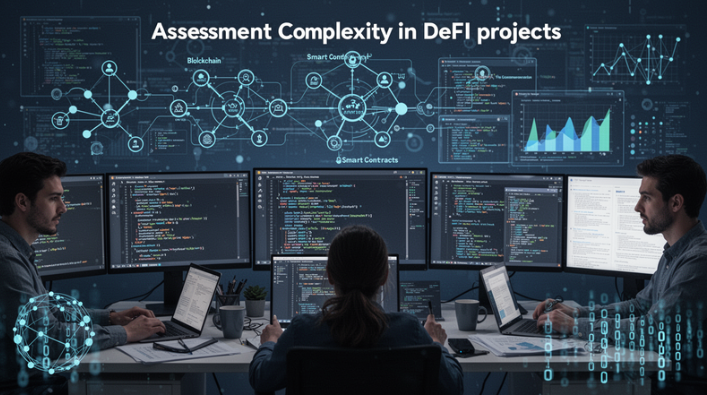
Decentralized finance has introduced powerful financial tools that operate without traditional intermediaries. Investors can lend assets, provide liquidity, and earn yield using blockchain-based protocols. However, many decentralized platforms involve advanced systems that require careful evaluation. Because of this, understanding DeFi technical complexity is essential for investors and developers alike.
While innovation drives the DeFi ecosystem, complexity often increases risk. Smart contracts, liquidity mechanisms, and governance systems interact in ways that may not be immediately obvious.
For this reason, analyzing DeFi technical complexity helps investors identify potential vulnerabilities while making better decisions about where to allocate capital.
Why Technical Complexity Matters in DeFi
Decentralized finance platforms rely heavily on automated systems. These systems execute transactions through smart contracts rather than traditional financial institutions.
Although automation increases efficiency, it also introduces technical risks. A small coding error may lead to major vulnerabilities.
Additionally, complex protocols may contain multiple interacting components. Each component introduces additional points of failure.
Evaluating DeFi technical complexity helps investors understand how these systems operate and where potential weaknesses may appear.
Innovation vs Risk in Decentralized Finance
DeFi developers constantly introduce new financial products. Examples include automated market makers, yield farming mechanisms, and algorithmic stablecoins.
These innovations attract users seeking high returns. However, innovation also increases protocol complexity.
New mechanisms may behave unpredictably during market volatility.
As a result, understanding DeFi technical complexity allows investors to balance innovation with risk awareness.
Understanding Smart Contract Architecture
Smart contracts form the foundation of most decentralized finance systems. These blockchain programs automatically execute financial transactions.
For example, lending protocols rely on smart contracts to manage collateral and interest payments.
Because smart contracts operate autonomously, coding errors may create vulnerabilities.
Developers often design multiple interacting contracts within a single protocol.
Evaluating these structures helps investors better understand DeFi technical complexity and potential system risks.
Layered Protocol Structures
Many DeFi projects build layered systems where several contracts interact simultaneously.
For example, liquidity pools may connect with reward distribution contracts and governance mechanisms.
These interactions increase flexibility but also introduce complexity.
Each additional layer may affect system stability.
Analyzing layered architecture provides valuable insight into DeFi technical complexity within decentralized ecosystems.
Evaluating Protocol Documentation
Clear documentation plays an important role in assessing decentralized finance platforms.
Technical documentation explains how protocols function and how users interact with them.
Whitepapers often describe economic models, governance rules, and technical structures.
Well-documented projects demonstrate transparency and professionalism.
Therefore, reviewing documentation helps investors interpret DeFi technical complexity more effectively.
Reading DeFi Whitepapers
Whitepapers outline the goals and architecture of decentralized finance projects.
These documents typically explain token utility, economic incentives, and protocol design.
Investors should analyze whether the system appears realistic and technically feasible.
If explanations remain vague or overly complicated, additional research becomes necessary.
Understanding whitepapers helps investors navigate DeFi technical complexity with greater confidence.
Security Audits and Code Reviews
Security audits provide one of the most important safeguards in decentralized finance.
Independent cybersecurity firms analyze smart contract code to identify vulnerabilities.
Audits may reveal potential attack vectors or programming mistakes.
Although audits cannot eliminate all risks, they significantly improve security standards.
Investors often prioritize protocols that demonstrate responsible management of DeFi technical complexity through regular audits.
Continuous Security Testing
Technology evolves quickly within blockchain ecosystems.
Protocols frequently release updates that introduce new features.
However, updates may also introduce new vulnerabilities.
Continuous testing ensures that new code does not compromise system stability.
Projects that prioritize ongoing testing usually manage DeFi technical complexity more responsibly.
Liquidity Mechanisms and Economic Design
Many decentralized finance platforms depend on liquidity pools.
These pools allow users to trade assets or provide funding for lending markets.
However, liquidity mechanisms often involve complex incentive structures.
Yield farming rewards, token emissions, and governance incentives interact within these systems.
Analyzing these mechanisms helps investors understand DeFi technical complexity in economic design.
Token Incentive Structures
Token incentives encourage users to provide liquidity or participate in governance.
However, poorly designed incentives may create unsustainable economic models.
For example, high rewards may temporarily attract liquidity but collapse when incentives decline.
Evaluating token distribution helps investors interpret DeFi technical complexity related to protocol economics.
Governance Systems in DeFi
Many decentralized finance platforms rely on community governance.
Token holders vote on protocol upgrades, fee adjustments, and development priorities.
Governance structures add flexibility but also increase system complexity.
Voting mechanisms, proposal systems, and treasury management interact within governance frameworks.
Analyzing governance models helps investors understand DeFi technical complexity within decentralized organizations.
Decentralized Autonomous Organizations
Some protocols operate as decentralized autonomous organizations.
These systems rely entirely on community decision-making rather than centralized leadership.
DAO governance introduces both transparency and technical challenges.
Voting systems must remain secure while preventing manipulation.
Understanding governance mechanics provides insight into DeFi technical complexity across decentralized networks.
Interoperability and Cross-Protocol Integration
Modern decentralized finance platforms rarely operate in isolation.
Protocols often integrate with multiple blockchain networks and other DeFi applications.
For example, a lending protocol may interact with decentralized exchanges or yield aggregators.
While integration increases functionality, it also increases technical complexity.
Each connection introduces additional dependencies.
Evaluating these integrations helps investors assess DeFi technical complexity within multi-protocol ecosystems.
Cross-Chain Interactions
Some decentralized finance platforms support cross-chain transactions.
Users may move assets between different blockchain networks.
Cross-chain bridges enable these transfers but also introduce additional security challenges.
Several high-profile hacks have targeted bridge infrastructure.
Understanding cross-chain mechanisms helps investors evaluate DeFi technical complexity in modern blockchain ecosystems.
User Interface and Accessibility
Although technical systems may remain complex, user interfaces should simplify interactions.
Well-designed platforms guide users through transactions safely.
Clear instructions reduce the likelihood of user errors.
Poorly designed interfaces may increase confusion and financial risk.
Platforms that simplify complex processes often manage DeFi technical complexity more effectively.
Simplifying Complex Systems
User experience plays a critical role in decentralized finance adoption.
Interfaces should explain transaction steps clearly while highlighting potential risks.
Educational resources also help users understand platform features.
When developers simplify complex systems, they reduce barriers to entry.
This approach helps users navigate DeFi technical complexity without advanced technical knowledge.
Identifying Warning Signs of Excessive Complexity
Some decentralized finance protocols become overly complex.
These systems may contain numerous interacting components and complicated incentive structures.
Although complexity can support innovation, excessive complexity increases risk.
Projects that lack clear documentation or transparent development practices deserve additional scrutiny.
Recognizing these warning signs helps investors avoid risky systems.
Careful evaluation ensures better understanding of DeFi technical complexity before investing.
Overengineered Protocol Design
Overengineered systems often attempt to solve multiple problems simultaneously.
While ambitious, such designs may introduce unnecessary risks.
Simpler protocols sometimes demonstrate stronger reliability.
Investors should evaluate whether complexity serves a clear purpose.
Thoughtful design reduces DeFi technical complexity while improving system stability.
Long-Term Sustainability of DeFi Protocols
Sustainable protocols balance innovation with security.
Successful platforms evolve gradually while maintaining system stability.
Continuous development improves efficiency and security over time.
Protocols that grow responsibly often attract larger communities and long-term investors.
Evaluating these characteristics helps investors interpret DeFi technical complexity within the broader ecosystem.
Developer Commitment and Updates
Active development teams regularly update their protocols.
These updates improve security, fix vulnerabilities, and introduce new features.
However, responsible updates require careful testing.
Projects that communicate updates clearly demonstrate professionalism.
Consistent development indicates effective management of DeFi technical complexity.
Conclusion
Decentralized finance continues transforming financial services through innovative blockchain technology. However, the technical systems behind these platforms often involve sophisticated structures that require careful analysis.
Understanding smart contract architecture, governance systems, and liquidity mechanisms helps investors evaluate decentralized finance projects more effectively. By examining documentation, security audits, and development practices, users gain valuable insights into platform reliability.
Ultimately, evaluating DeFi technical complexity allows investors to make informed decisions while minimizing potential risks. As decentralized finance evolves, understanding technical structures will remain essential for navigating the growing blockchain economy.
FAQ
- Why is technical analysis important when evaluating decentralized finance platforms?
Technical analysis helps investors understand protocol design, identify vulnerabilities, and assess overall system reliability. - What role do smart contracts play in decentralized finance?
Smart contracts automate transactions and enforce financial rules within blockchain protocols. - How can investors verify whether a protocol has been audited?
Most projects publish audit reports from independent cybersecurity firms on their official websites. - Why do some decentralized protocols appear extremely complicated?
Many platforms integrate multiple financial mechanisms and blockchain networks, which increases system complexity. - Can beginners safely interact with decentralized finance applications?
Yes, but beginners should research projects carefully and start with small amounts while learning platform features.