AI and Blockchain Convergence: Fueling the Tokenization of Real-World Assets

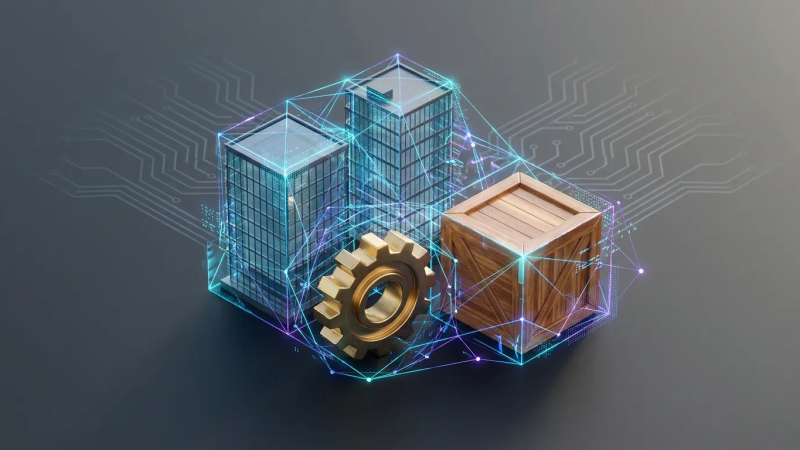
The cryptocurrency and blockchain industry has undergone significant maturation, transitioning from speculative interest to foundational infrastructure. A critical development driving this evolution is the AI blockchain tokenization convergence, which is reshaping how we perceive and interact with digital assets. This powerful synergy promises to redefine ownership and investment in the digital age.
The Fusion of AI and Blockchain: Beyond Hype
For years, the integration of Artificial Intelligence and blockchain technology was largely theoretical, a subject of speculative discussion. However, between 2024 and 2025, this synergy moved beyond mere hype, achieving structural maturity in 2026. This convergence is now fundamental infrastructure, creating autonomous, verifiable on-chain systems and new financial products. As Big Tech firms like Amazon, Alphabet, Microsoft, Meta, and Oracle project spending between $600 billion to $725 billion on AI infrastructure in 2026—a 77% increase from 2025—the demand for efficient and cost-effective solutions is soaring. Decentralized computing, powered by blockchain, emerges as a compelling alternative, offering scalability and transparency that centralized systems often lack.
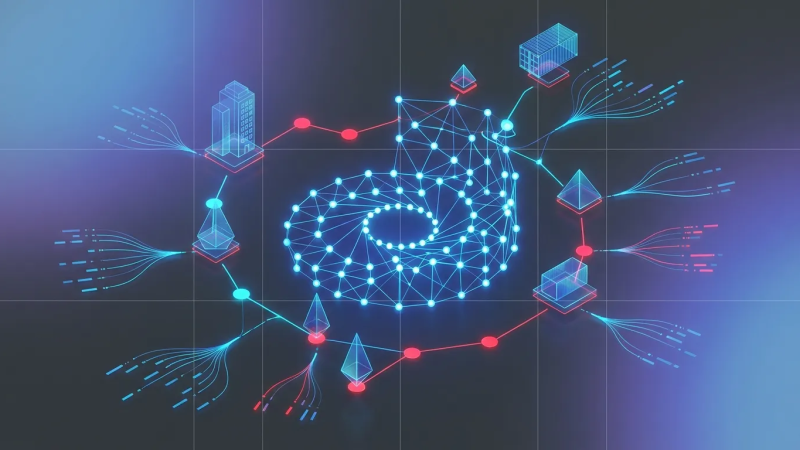
This fusion promises to enhance the efficiency, security, and intelligence of blockchain networks. AI models can optimize network performance, predict market trends, and even automate smart contract execution. Meanwhile, blockchain provides the immutable ledger and decentralized framework necessary for AI’s verifiable and trustworthy operation. This symbiotic relationship is particularly impactful in the realm of asset tokenization, paving the way for advanced financial instruments.
Asset Tokenization Reaches an Inflection Point
Asset tokenization, the process of converting real-world assets into digital tokens on a blockchain, is no longer a nascent concept. It has reached a significant inflection point, moving rapidly from pilot programs to production-grade infrastructure. The first half of 2025 alone saw tokenized real-world assets (RWAs) grow by over 260%, reaching approximately $23 billion. This growth underscores a profound shift in how traditional assets are owned, traded, and managed. Consequently, new opportunities for investors are emerging globally.
Key Areas of RWA Tokenization
- Tokenized Government Bonds: Representing a digital share of government debt, these offer new avenues for liquidity and fractional ownership, attracting a broader investor base than traditional bond markets. This innovation makes government debt more accessible.
- On-Chain Money Market Funds: These funds leverage blockchain to offer enhanced transparency and efficiency, providing digital access to short-term, low-risk investments that were historically cumbersome to access. Indeed, this streamlines the investment process significantly.
- Tokenized Private Credit and Real Estate: By fractionalizing ownership, blockchain makes illiquid assets like private credit and real estate accessible to a wider range of investors, potentially democratizing wealth creation and improving market liquidity. This advancement allows for smaller investment increments.
The ability of AI to analyze vast datasets, identify market inefficiencies, and predict optimal tokenization strategies further accelerates this trend. Ultimately, this leads to more informed investment decisions and efficient market operations. For more on the complexities of these integrations, readers can explore how RWA DeFi Integration Creates Confusion for Users.
How AI Enhances Real-World Asset Tokenization
AI plays a pivotal role in refining the process of real-world asset tokenization. Its capabilities extend from initial asset evaluation to post-tokenization management. Specifically, AI algorithms can analyze market data, assess asset valuations, and even predict potential risks associated with various assets. Therefore, this leads to more accurate and reliable token representations on the blockchain.
Furthermore, AI-driven analytics can identify optimal pricing strategies for tokenized assets, ensuring fair market value and attracting a wider pool of investors. This is crucial for maintaining liquidity and stability within these new digital markets. In addition, AI can automate compliance checks, ensuring that tokenized assets adhere to regulatory frameworks across different jurisdictions, which is a significant hurdle for traditional finance. The integration of AI for risk assessment in this domain provides a robust framework for secure digital asset management.
AI-Powered Due Diligence and Valuation
Traditional asset valuation often relies on manual processes and expert opinions, which can be time-consuming and prone to human error. Conversely, AI models can process vast amounts of data, including historical performance, market sentiment, and macroeconomic indicators, to provide real-time valuations. This enhances the accuracy and speed of due diligence for tokenized assets. For example, in real estate tokenization, AI can analyze property data, local market trends, and even demographic shifts to provide a comprehensive valuation. This level of detail is difficult to achieve manually.
Moreover, AI can continuously monitor the performance of tokenized assets post-issuance, alerting investors to significant changes or potential issues. This proactive approach helps in managing portfolios more effectively and mitigates risks associated with volatile markets. The synergy of AI with digital asset creation is a critical component of the future of finance.
The Role of Blockchain in Verifiable AI
While AI brings intelligence to the tokenization process, blockchain provides the essential infrastructure for trust and verifiability. Every transaction, every ownership transfer, and every piece of data related to a tokenized asset is immutably recorded on the blockchain. This creates an unalterable audit trail that is accessible to all participants, significantly reducing fraud and increasing transparency. Consequently, investor confidence is boosted.
Specifically, smart contracts, which are self-executing agreements stored on the blockchain, automate many aspects of asset tokenization. From issuing tokens to distributing dividends and managing voting rights, these contracts operate without intermediaries. This reduces costs and increases efficiency. The combination of AI for intelligent decision-making and blockchain for secure execution results in a highly robust and trustworthy system for digital assets. The integrity of the system is paramount.
Decentralized AI and Data Integrity
The convergence also extends to decentralized AI, where AI models are trained and executed on decentralized networks. This approach enhances data privacy and security, as data is not controlled by a single entity. Instead, it is distributed across multiple nodes, making it more resistant to censorship and manipulation. This is particularly important when dealing with sensitive financial data involved in asset tokenization.
Furthermore, blockchain can be used to record the provenance of AI models and their training data. This ensures that the AI used in tokenization processes is transparent and unbiased, thereby building greater trust in the outcomes. The verifiable nature of blockchain ensures that the AI’s decisions are auditable, a key factor for regulatory acceptance. Therefore, the overall system gains credibility.
The Future Landscape of Digital Assets with AI Blockchain Tokenization
The future of digital assets is inextricably linked with the advancements in AI blockchain tokenization. This convergence is not merely an incremental improvement; it represents a fundamental shift in how value is created, exchanged, and managed. We can anticipate a future where virtually any real-world asset, from intellectual property to precious metals, can be tokenized and traded globally with unprecedented efficiency. This will foster new investment opportunities for a diverse range of participants.
The enhanced capabilities brought by AI in analyzing vast datasets, predicting market movements, and automating complex processes will make tokenized markets more dynamic and responsive. Simultaneously, blockchain’s inherent security and transparency will ensure that these markets remain trustworthy and resilient. For investors interested in broader market trends, monitoring Market Cap data can provide valuable insights into the growing influence of tokenized assets.
Regulatory Evolution and Adoption
As AI blockchain tokenization gains traction, regulatory frameworks will inevitably evolve to accommodate these innovations. Governments and financial institutions worldwide are beginning to recognize the potential of tokenized assets, leading to the development of clearer guidelines and legal structures. This will further legitimize the market and attract institutional investors, accelerating mainstream adoption. Indeed, clarity in regulation is vital for growth.
The role of AI in assisting with regulatory compliance cannot be overstated. AI systems can continuously monitor transactions for suspicious activities, ensure adherence to anti-money laundering (AML) and know-your-customer (KYC) regulations, and generate comprehensive audit reports. This significantly reduces the compliance burden for entities operating in the tokenized asset space, making it more attractive for traditional finance players. Consequently, the adoption rate of these technologies is expected to rise.
Challenges and Opportunities in AI Blockchain Tokenization
Despite the immense potential, the path to widespread AI blockchain tokenization is not without challenges. Scalability remains a key concern, as current blockchain networks may struggle to handle the sheer volume of transactions required for a fully tokenized global economy. Furthermore, interoperability between different blockchain networks and traditional financial systems is crucial for seamless integration. These technical hurdles require continuous innovation and development.
However, these challenges also present significant opportunities. The demand for scalable, secure, and interoperable blockchain solutions is driving innovation in layer-2 scaling solutions, cross-chain bridges, and decentralized identity protocols. The collaboration between AI and blockchain developers is fostering new approaches to overcome these obstacles, pushing the boundaries of what is possible in digital finance. Therefore, the ecosystem is constantly evolving.
Educating the Market
Another challenge involves educating the broader public and traditional financial institutions about the benefits and mechanics of AI blockchain tokenization. Many potential investors and businesses remain unfamiliar with blockchain technology and the concept of tokenized assets. Clear communication and accessible educational resources are essential to bridge this knowledge gap. Platforms like Coin Best News play a vital role in disseminating this information through their Blog.
By providing clear, concise, and insightful analysis, media platforms can help demystify these complex technologies, fostering greater understanding and adoption. The more informed investors become, the more confident they will be in participating in this evolving market. This will ultimately drive demand and liquidity for tokenized assets. Moreover, transparency builds trust.
Real-World Impact and Use Cases
The real-world impact of AI blockchain tokenization is already being felt across various sectors. Beyond financial instruments, this convergence is transforming supply chain management, intellectual property rights, and even environmental initiatives. For instance, tokenized carbon credits, verified by AI-driven monitoring, offer a transparent and efficient way to track and trade environmental offsets, promoting sustainability.
In supply chains, AI can optimize logistics and detect fraud, while blockchain provides an immutable record of product provenance, ensuring authenticity and ethical sourcing. This level of transparency benefits both consumers and businesses. The ability to track assets from their origin to their final destination with complete certainty is a powerful application. For deeper insights into institutional approaches, consider reading about Institutional Crypto Investing Lessons for Wealth.
The convergence also holds immense promise for fractional ownership of high-value assets like art, luxury goods, and even sports teams. AI can help manage the fractionalization process, while blockchain ensures secure and transparent ownership records. This opens up investment opportunities that were previously exclusive to a select few, democratizing access to wealth-generating assets. CoinDesk provides further details on asset tokenization, demonstrating the industry’s evolving understanding. Additionally, IBM’s perspective on blockchain and AI collaboration highlights its transformative business potential.
Conclusion
The convergence of AI and blockchain technology, particularly in the realm of asset tokenization, marks a pivotal moment in the evolution of digital finance. This powerful synergy is moving beyond theoretical discussions to become a foundational infrastructure, transforming how real-world assets are owned, managed, and traded. With AI enhancing efficiency, security, and intelligence, and blockchain providing immutable trust and transparency, the future of tokenized assets appears robust and expansive. As these technologies mature and regulatory frameworks adapt, we can anticipate a global financial landscape that is more accessible, efficient, and equitable. Coin Best News remains committed to providing timely insights into these transformative developments. The journey towards a fully tokenized world, powered by intelligent automation, is well underway.
FAQ
What does the fusion of AI and blockchain mean for financial markets?
The fusion of AI and blockchain for financial markets means enhanced efficiency, security, and intelligence. AI can optimize trading strategies, predict market trends, and automate processes, while blockchain provides immutable records and decentralized trust, leading to more transparent and robust financial systems.
How does AI assist in the valuation of tokenized assets?
AI assists in the valuation of tokenized assets by analyzing vast datasets, including historical market data, economic indicators, and real-time news. This allows for more accurate and dynamic valuations, reducing reliance on manual processes and increasing the reliability of asset pricing on the blockchain.
What are some real-world assets being tokenized with this technology?
Real-world assets being tokenized with this technology include government bonds, private credit, real estate, and even intellectual property. This process converts traditional assets into digital tokens, making them more liquid and accessible to a wider range of investors through fractional ownership.
Why is blockchain important for the trustworthiness of AI-driven systems?
Blockchain is crucial for the trustworthiness of AI-driven systems because it provides an immutable and transparent ledger for all transactions and data related to tokenized assets. This ensures verifiability, reduces the risk of fraud, and creates an auditable trail for AI’s decisions, building greater confidence in the system.
What challenges exist in the widespread adoption of AI and blockchain for asset digitization?
Challenges in the widespread adoption of AI and blockchain for asset digitization include scalability issues of current blockchain networks, ensuring interoperability between different systems, and the need for evolving regulatory frameworks. Additionally, educating the market about these complex technologies remains a significant hurdle.