Biometrics Portfolio Protection Is Transforming Security
The way investors protect their assets is evolving rapidly, and biometrics portfolio protection is now at the center of this transformation. Traditional security methods such as passwords and PINs are no longer enough to defend against modern threats. As digital investing grows, stronger and more reliable authentication systems have become essential.
At the same time, cyber threats are becoming more sophisticated. Hackers can easily exploit weak passwords or phishing attacks. Because of this, investors need a more secure approach that cannot be easily replicated. Biometrics portfolio protection offers a powerful solution by using unique physical traits, such as fingerprints or facial recognition, to verify identity. This shift is redefining how portfolios are secured across financial platforms.
Why Traditional Security Methods Are No Longer Enough
For many years, passwords have been the primary line of defense. However, they are increasingly vulnerable to attacks. Weak or reused passwords can be compromised quickly, which exposes sensitive financial data. Therefore, relying solely on traditional methods creates significant risks.
In addition, phishing attacks continue to deceive users. Even experienced investors can fall victim to fake emails or websites. Once credentials are stolen, attackers gain direct access to accounts. This is why biometrics portfolio protection is gaining attention as a safer alternative.
Unlike passwords, biometric data is unique to each individual. It cannot be guessed or easily stolen. As a result, it provides a higher level of security. Furthermore, biometric systems reduce the need to remember complex passwords, making them both secure and convenient.
How Biometrics Improve Portfolio Security
Biometric authentication strengthens security by verifying identity through physical characteristics. These include fingerprints, facial features, and even voice patterns. When used correctly, biometrics portfolio protection significantly reduces unauthorized access.
One major advantage is accuracy. Modern biometric systems can detect subtle differences, ensuring that only the correct user gains access. This precision makes it difficult for attackers to bypass security measures.
Additionally, biometrics work in real time. Authentication happens instantly, which improves user experience without compromising safety. Investors can access their portfolios quickly while maintaining strong protection.
Another benefit is resistance to common attacks. Since biometric data is not easily shared or duplicated, it limits the effectiveness of phishing and credential theft. This makes biometrics a valuable tool in modern security strategies.
The Role Of Multi-Factor Authentication
While biometrics are powerful, they are even more effective when combined with other security measures. Multi-factor authentication adds additional layers of protection, making it harder for attackers to succeed.
For example, a system may require both biometric verification and a one-time code. This combination ensures that even if one layer is compromised, access is still restricted. Therefore, biometrics portfolio protection works best as part of a broader security framework.
Moreover, multi-factor systems adapt to different risk levels. High-value transactions may require additional verification steps. This flexibility enhances security without creating unnecessary friction for users.
By integrating biometrics with other methods, investors can achieve a balanced approach that prioritizes both safety and convenience.
How Financial Platforms Are Adopting Biometrics
Financial platforms are increasingly integrating biometric technology into their systems. This trend reflects the growing demand for stronger security solutions. As a result, biometrics portfolio protection is becoming a standard feature across many applications.
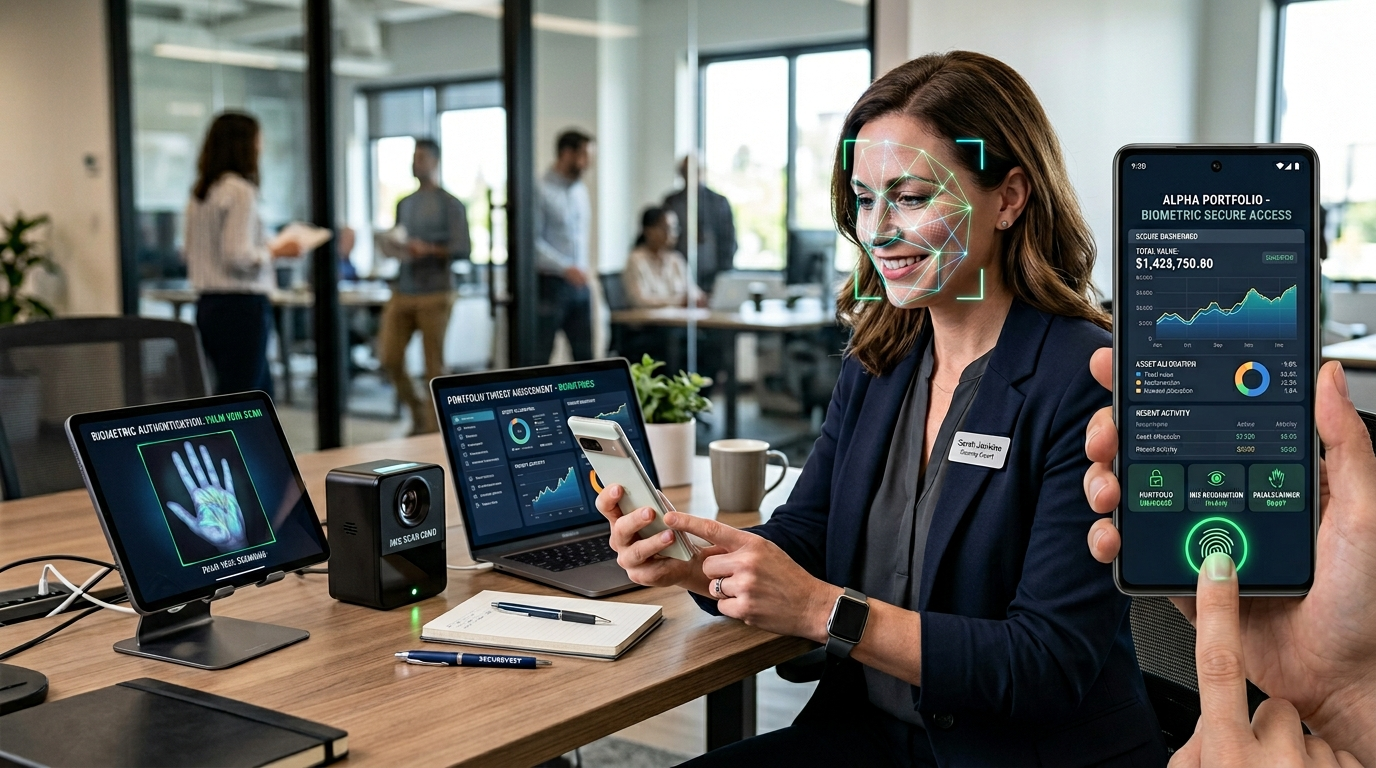
Mobile banking apps, for instance, now commonly use fingerprint or facial recognition for login. This approach simplifies access while maintaining security. Similarly, investment platforms are adopting biometrics to protect user accounts.
In addition, hardware devices such as smartphones and tablets support biometric authentication. This widespread availability makes it easier for users to adopt these technologies. As more platforms implement biometrics, overall security improves across the industry.
Furthermore, continuous authentication is emerging as a new trend. Instead of verifying identity only at login, systems monitor user behavior throughout the session. This ongoing verification adds another layer of protection.
Benefits Of Biometrics For Investors
Biometric technology offers several advantages that make it ideal for protecting investment portfolios. One of the most important benefits is enhanced security. By using unique identifiers, biometrics reduce the risk of unauthorized access.
Convenience is another key advantage. Investors no longer need to remember complex passwords or carry additional devices. Instead, they can access their accounts quickly using simple authentication methods.
Additionally, biometrics improve user confidence. Knowing that their accounts are protected by advanced technology encourages investors to engage more actively with their portfolios. This confidence supports better decision-making.
Moreover, biometric systems can adapt to different environments. Whether accessing accounts from home or on the go, users can rely on consistent security. This flexibility makes biometrics a practical solution for modern investors.
Challenges And Limitations Of Biometric Security
Despite its advantages, biometrics portfolio protection also has challenges. One concern is data privacy. Biometric data is highly sensitive, and its storage must be handled carefully. If compromised, it cannot be changed like a password.
Another issue involves accuracy. While biometric systems are advanced, they are not perfect. Environmental factors or device limitations can affect performance. However, ongoing improvements continue to address these challenges.
Additionally, implementation costs can be significant. Developing and maintaining biometric systems requires investment. Smaller platforms may face challenges in adopting these technologies.
Nevertheless, the benefits often outweigh the limitations. As technology advances, these challenges are expected to decrease over time.
The Future Of Biometric Security In Investing
The future of biometrics portfolio protection looks promising as technology continues to evolve. Innovations such as behavioral biometrics are already emerging. These systems analyze patterns like typing speed or navigation behavior to verify identity.
Artificial intelligence is also playing a role. AI enhances biometric systems by improving accuracy and detecting anomalies. This combination creates a more robust security framework.
Furthermore, decentralized identity solutions are gaining attention. These systems allow users to control their biometric data, reducing reliance on centralized storage. This approach enhances privacy and security.
As adoption increases, biometrics will likely become a standard feature in investment platforms. This shift will redefine how portfolios are protected in the digital age.
Conclusion
Biometric technology is transforming the way investors secure their assets. Biometrics portfolio protection offers a powerful alternative to traditional methods, combining security with convenience. As threats continue to evolve, adopting advanced authentication systems becomes essential.
By understanding the benefits and challenges of biometrics, investors can make informed decisions about their security strategies. Integrating biometrics with other protective measures creates a comprehensive approach that reduces risk.
Ultimately, the future of portfolio protection lies in innovation. As biometric technology advances, it will continue to shape the financial landscape. Investors who embrace these changes will be better equipped to protect their assets and navigate the complexities of modern markets.
FAQ
- What is biometric authentication in investing?
Biometric authentication uses physical traits like fingerprints or facial recognition to verify identity and secure accounts. - Are biometric systems safer than passwords?
Biometric systems are generally more secure because they rely on unique physical characteristics that are difficult to replicate. - Can biometric data be hacked?
While rare, biometric data can be compromised if not stored securely, which is why strong encryption is essential. - Do all investment platforms support biometrics?
Many platforms now support biometric authentication, especially mobile apps, but adoption varies across services. - What is the future of biometric security in finance?
The future includes advanced systems like behavioral biometrics and AI-driven authentication for enhanced protection.