
Decentralized Social Media: Reclaiming Digital Identity and Data
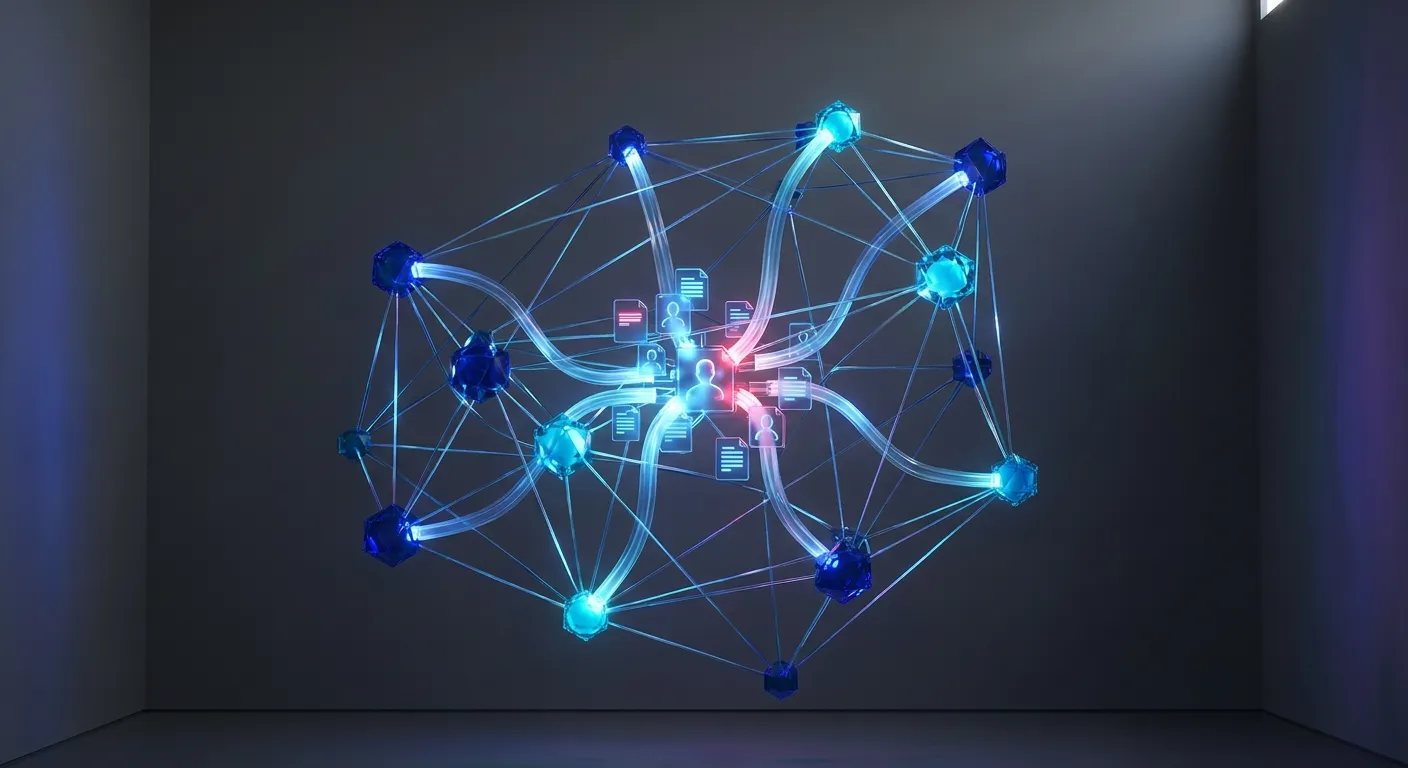
The digital landscape is shifting towards a new paradigm with the resurgence of decentralized social media, promising greater user control and data ownership. For too long, our online identities, data, and content have been held captive by centralized platforms, often at the cost of privacy and fair compensation. However, 2026 marks a pivotal year, with Ethereum co-founder Vitalik Buterin indicating a full return to decentralized social media, moving from speculative experiments to functional, value-driven infrastructure. This shift is not just a trend; it’s a fundamental recalibration of our relationship with the internet.
The Promise of SocialFi: Beyond Centralized Control
The core problem with traditional social media platforms is their centralized nature. They control our data, dictate content policies, and monetize our attention, often without fair remuneration or transparency. This model has led to issues ranging from censorship and data breaches to algorithmic manipulation and the erosion of digital identity. SocialFi platforms aim to reverse this, putting power back into the hands of users through blockchain technology.
By leveraging decentralized networks, users can own their data, control their digital identity, and participate directly in the value generated by their content. This aligns with the broader ethos of the blockchain and digital asset industry, which champions transparency, user empowerment, and censorship resistance. Furthermore, the integration of real-world assets (RWA) into decentralized finance (DeFi) platforms, while sometimes causing user confusion as discussed in RWA DeFi Integration Creates Confusion for Users, demonstrates the ongoing evolution of decentralized ecosystems.
From Speculation to Structural Maturity: 2026 and Beyond
Early forays into blockchain social media were often speculative, focusing more on token price than practical utility. However, the period between 2024 and 2026 witnessed a significant evolution. The convergence of AI and blockchain, for instance, is creating autonomous, verifiable on-chain systems that are foundational for robust decentralized applications, including social networks. This structural maturity means that the infrastructure is now in place for truly functional and scalable platforms.
Key Projects Driving the Shift
Several projects are gaining significant traction, demonstrating the viability and potential of Web3 social networks. They are not just replicating existing platforms but are innovating around core principles:
- Farcaster: A decentralized protocol for building social apps, emphasizing open, permissionless, and user-owned social graphs.
- Lens Protocol (stewarded by Mask Network): Focuses on composable and user-owned social profiles, allowing users to take their content and connections across different applications.
- Pump.fun, RealLink, Zora, Decentralized Social (DESO), and Swop: These platforms exemplify the diverse approaches to decentralized social media, focusing on everything from tokenized content creation and engagement incentives to robust digital identity solutions.
These projects highlight a collective effort to build an internet where digital identity is self-sovereign, content is immutable, and value flows directly to creators and users. The shift towards this new model represents a significant departure from the current internet architecture, promising a more equitable digital future. Moreover, insights into the broader crypto market, including altcoins and Bitcoin, are regularly updated on CoinBestNews — Crypto News, Altcoins & Blockchain Insights.
Understanding the Core Principles of Decentralized Social Media
The fundamental tenets of decentralized social media platforms are rooted in blockchain technology. Firstly, data ownership is paramount. Users truly own their content and personal information, stored on immutable ledgers rather than proprietary servers. Consequently, the risk of data breaches and unauthorized access is significantly reduced. Secondly, censorship resistance is a key feature. Because no single entity controls the network, content moderation is either community-driven or governed by transparent, immutable rules, making it harder for platforms to arbitrarily remove or suppress information. This contrasts sharply with the challenges faced by traditional platforms, which often grapple with balancing free speech and content policies.
Thirdly, interoperability is a significant advantage. User profiles and content can potentially be moved across different decentralized applications, fostering a more fluid and integrated online experience. For example, a user’s social graph created on one platform could be seamlessly utilized on another, without needing to rebuild their network from scratch. This level of portability is virtually nonexistent in the current centralized ecosystem, where each platform acts as a walled garden. Ultimately, these principles aim to create a more democratic and user-centric internet.
The Economic Shift: Content Monetization and Creator Economy
One of the most compelling aspects of decentralized social media is its potential to revolutionize the creator economy. Traditional platforms often take a substantial cut of creators’ earnings, and monetization models can be opaque. However, blockchain-based social networks enable direct monetization through various mechanisms. Tokens, NFTs, and direct peer-to-peer payments allow creators to receive fair compensation for their work, often with lower fees and greater transparency. For instance, platforms might integrate token-gated content or allow users to tip creators directly using cryptocurrency. This direct connection between creators and their audience fosters a more sustainable and equitable economic model.
Furthermore, the rise of NFTs has already demonstrated the power of digital ownership for artists and creators, as explored in discussions around NFT Standards Keep Changing Too Fast. This concept extends to social content, where posts, images, and videos could be tokenized, giving creators verifiable ownership and allowing them to earn royalties from secondary sales. The shift toward a truly decentralized creator economy empowers individuals to build sustainable careers independent of platform whims, creating a more robust and diverse digital content landscape.
Challenges and the Road Ahead for Web3 Social Networks
Despite the immense promise, the path to widespread adoption for decentralized social media is not without its hurdles. Scalability remains a significant challenge. Blockchain networks, while secure and transparent, can sometimes struggle with the sheer volume of transactions and data required to support a global social network. Developers are actively working on layer-2 solutions and more efficient consensus mechanisms to address these issues, but it will take time to reach parity with the performance of centralized platforms. Another hurdle is user experience. Many decentralized applications still have steeper learning curves compared to their Web2 counterparts, requiring users to manage wallets, understand gas fees, and navigate complex interfaces. Simplifying these interactions is crucial for attracting a mainstream audience.
Moreover, regulatory uncertainty poses a continuous challenge. Governments worldwide are still grappling with how to regulate cryptocurrencies and blockchain technology, and this ambiguity can deter investment and innovation in the decentralized space. Despite these challenges, the momentum behind Web3 social networks is undeniable. The continuous innovation in blockchain technology, coupled with a growing demand for data privacy and user control, suggests a promising future. The ongoing evolution of institutional crypto investing, as highlighted in Institutional Crypto Investing Lessons for Wealth, also points to increasing maturity in the broader blockchain ecosystem, which will undoubtedly benefit these emerging platforms.
The Role of Digital Identity in Decentralized Social Media
Digital identity is at the heart of the decentralized social media revolution. In the current internet, our identities are fragmented across countless platforms, each holding a piece of our data. With decentralized identity solutions, users can create a self-sovereign identity (SSI) that they fully control. This means that instead of relying on platforms to verify who we are, we can present verifiable credentials directly from our own digital wallets. This approach not only enhances privacy but also reduces the risk of identity theft and simplifies the process of proving our credentials online. For instance, a user could prove their age or qualifications without revealing any other personal information to a platform, thanks to zero-knowledge proofs.
This shift from centralized identity providers to user-controlled SSI is a fundamental change in how we interact online. It empowers individuals to manage their digital footprint, choosing exactly what information to share and with whom. Consequently, the power dynamics between users and platforms are rebalanced, putting the individual back in control of their digital self. This concept of self-sovereign identity is a cornerstone of the broader Web3 movement, extending beyond social media to encompass all online interactions, providing a more secure and private digital existence for everyone involved. To understand more about emerging trends, visitors can always check the Blog section of Coin Best News.
The Future Landscape of Online Interaction: Beyond 2026
Looking beyond 2026, the trajectory for decentralized social media points towards a more integrated, user-centric internet. We can anticipate further advancements in scalability, making these platforms as fast and responsive as their centralized counterparts. Furthermore, the user experience will become increasingly intuitive, with interfaces designed for mainstream adoption, abstracting away the complexities of blockchain technology. The convergence of AI and blockchain will also play a crucial role, enabling more intelligent and personalized experiences while maintaining user privacy and data ownership. Imagine AI assistants operating on decentralized networks, helping users manage their content and interactions without compromising their data. This future promises a digital space where individuals are not merely consumers but active participants and owners.
The impact of decentralized social media will extend beyond just social interaction. It will influence how we consume news, engage in commerce, and even participate in governance, fostering a more democratic and transparent digital society. The metaverse, for example, which is often discussed in terms of market sentiment through on-chain signals, as seen in Metaverse Market Sentiment Through On-Chain Signals, will undoubtedly benefit from robust decentralized identity and social layers. This vision of a truly open and user-controlled internet is not just a technological aspiration but a societal imperative, ensuring that the digital future prioritizes individual rights and collective well-being. For more information about our mission, please visit our About Us page.
Conclusion
The journey towards widespread decentralized social media is well underway. The shift from centralized control to user empowerment is not merely a technological upgrade but a fundamental redefinition of our digital lives. Platforms built on blockchain technology are offering compelling alternatives, promising greater privacy, data ownership, and fair compensation for creators. While challenges remain, particularly concerning scalability and user experience, the continuous innovation within the Web3 space is steadily paving the way for a more equitable and transparent internet. The vision of a truly user-owned and censorship-resistant digital realm is rapidly moving from concept to reality, shaping the future of online interaction for generations to come. This evolution represents a significant step forward in reclaiming our digital identities and data.
FAQ About Decentralized Social Media
What is blockchain-based social networking?
Blockchain-based social networking refers to social platforms built on decentralized blockchain technology. Unlike traditional social media, these platforms give users more control over their data, content, and digital identity, often incorporating cryptocurrency for monetization and governance.
How do decentralized social networks protect user privacy?
Decentralized social networks protect user privacy by storing data on distributed ledgers rather than centralized servers. This means no single entity controls all user data, reducing the risk of data breaches and unauthorized access. Many also use encryption and self-sovereign identity solutions.
Can content be censored on a decentralized social platform?
Censorship is significantly harder on decentralized social platforms compared to traditional ones. Since there’s no central authority to dictate content removal, moderation is often handled by the community or through transparent, immutable rules set by the protocol, making arbitrary censorship much more difficult.
What are some examples of Web3 social networks?
Some notable examples of Web3 social networks include Farcaster, Lens Protocol, Decentralized Social (DESO), and Zora. These platforms are experimenting with different approaches to user-owned content, social graphs, and monetization models, aiming to provide alternatives to centralized platforms.
What benefits do creators gain from social media on the blockchain?
Creators on social media built on the blockchain can gain several benefits, including direct monetization through tokens and NFTs, fair compensation without intermediaries, and verifiable ownership of their content. This allows for more transparent and equitable income streams, fostering a robust creator economy.