
The Future of Artificial Intelligence in the Metaverse
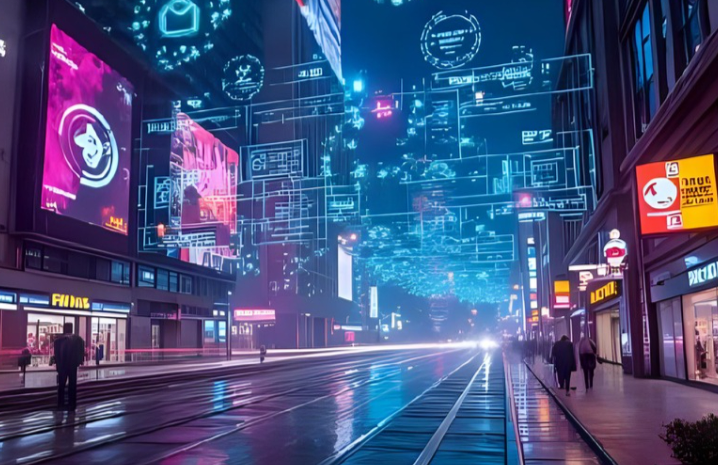
The Metaverse — a vast, interconnected network of digital spaces — is rapidly becoming one of the most transformative frontiers in technology. Yet, what will truly power this new universe isn’t just virtual worlds or 3D graphics. It’s artificial intelligence (AI) — the brain behind the Metaverse’s creativity, interactivity, and intelligence.
The future of artificial intelligence in the Metaverse will redefine how we live, work, and play online. From self-learning avatars to adaptive environments, AI will turn virtual spaces into intelligent, personalized realities that feel alive.
Let’s explore how AI is shaping the Metaverse today, and what the future holds.
Understanding the Role of AI in the Metaverse
At its core, the Metaverse is about connection, immersion, and continuity. AI makes that possible by managing complexity and creating experiences that adapt to users in real time.
In the Metaverse, AI enables:
- Intelligent avatars that evolve through interaction.
- Virtual environments that respond dynamically to users.
- Realistic communication between humans and digital entities.
Essentially, AI transforms static digital worlds into living ecosystems that learn, grow, and interact autonomously.
1. AI Avatars: The Face of the Future
AI-driven avatars are the cornerstone of personalization in the Metaverse.
Unlike basic digital characters, AI avatars can:
- Learn from user behavior and preferences.
- Communicate naturally using language models.
- Adapt their personalities over time.
Imagine a personal assistant inside the Metaverse that not only recognizes you but also understands your goals, emotions, and habits. These avatars could help you navigate virtual workplaces, manage investments, or even provide mental wellness support.
Alt text: AI avatars interacting in a virtual Metaverse workspace
2. Natural Language Processing (NLP) and Communication
In the Metaverse, communication won’t just be text or video — it will be conversational and context-aware.
Natural Language Processing (NLP), powered by AI, will allow seamless interaction between humans and digital entities. You could:
- Talk to NPCs (non-player characters) in virtual games as if they were real.
- Receive instant translation between different languages during meetings.
- Ask your virtual assistant to modify your virtual environment — and it will understand.
AI-driven communication will break language barriers and make the Metaverse universally accessible.
3. Smart Environments and Adaptive Worlds
AI can create responsive virtual environments that adapt to user behavior.
For example:
- Virtual retail stores that rearrange products based on your preferences.
- Fitness spaces that adjust difficulty levels dynamically.
- Art galleries that change exhibits according to your interests.
By combining AI with procedural generation, developers can create infinite, evolving worlds that never feel repetitive or artificial.
4. Machine Learning for Personalization
Machine learning is the secret ingredient that makes the Metaverse feel tailor-made.
It enables AI systems to analyze your actions, interactions, and interests to personalize every experience — from recommending virtual events to customizing avatars or digital homes.
The more time users spend in the Metaverse, the smarter and more adaptive their experiences will become.
5. Ethical AI and Data Privacy in the Metaverse
With great intelligence comes great responsibility.
AI systems in the Metaverse will process enormous amounts of user data — from speech and behavior to biometrics and emotions. Without proper governance, this poses major ethical and privacy risks.
To ensure ethical AI development, companies must prioritize:
- Transparency: Users should know how AI collects and uses their data.
- Consent: No AI should operate without user permission.
- Fairness: AI must avoid bias that could affect social or economic equality.
The future of AI in the Metaverse depends on trust — and that trust must be earned.
6. AI and the Economy of the Metaverse
The Metaverse economy — driven by virtual goods, NFTs, and digital services — will be powered by AI automation.
AI will:
- Match buyers and sellers using predictive algorithms.
- Detect fraud and ensure secure transactions.
- Generate dynamic pricing models for digital assets.
Intelligent analytics will also help creators understand demand trends, making the Metaverse’s economy smarter and more efficient.
7. AI-Powered Virtual Companions
Imagine walking through a virtual city with a personal AI companion who knows your schedule, health data, and mood.
These companions could:
- Offer coaching and support for productivity or mental health.
- Act as guides for exploring digital worlds.
- Learn your emotional cues and respond empathetically.
Such relationships between humans and AI will redefine companionship and digital interaction — both inside and beyond the Metaverse.
8. The Role of AI in Gaming within the Metaverse
AI has already revolutionized gaming — and in the Metaverse, it’s taking things further.
In future games, AI-driven NPCs will:
- React dynamically to player decisions.
- Develop personalities and storylines over time.
- Learn from millions of interactions to create unique gameplay experiences.
AI will also help generate content — maps, missions, and characters — without human input, leading to infinite possibilities for entertainment.
9. Digital Twins and Simulation AI
AI-driven digital twins — virtual replicas of physical systems — are becoming essential for industries operating inside the Metaverse.
Companies can use them to:
- Simulate manufacturing processes.
- Optimize city infrastructure and logistics.
- Test sustainability models without real-world risk.
These simulations, powered by AI, allow real-time experimentation that saves cost, time, and resources.
10. AI and Emotional Intelligence in Virtual Spaces
The next evolution of AI is emotionally intelligent AI — capable of recognizing and responding to human feelings.
Using facial recognition, voice tone analysis, and behavioral cues, AI can tailor experiences to match a user’s emotional state.
For example, a virtual learning environment could detect frustration and adjust teaching style automatically, improving engagement and retention.
11. AI’s Role in Security and Moderation
As millions interact in the Metaverse, maintaining a safe and respectful environment becomes essential.
AI will act as a digital guardian, detecting and managing:
- Harassment or hate speech in real time.
- Fraudulent behavior and scams.
- Identity theft or unauthorized data access.
Automated moderation powered by AI ensures that the Metaverse remains a place of creativity and community — not chaos.
12. Interoperability and AI Governance
For the Metaverse to function seamlessly, AI must help standardize how different platforms and economies interact.
Future AI systems will ensure:
- Cross-platform data compatibility.
- Identity verification across digital ecosystems.
- Governance that balances innovation with ethics.
AI won’t just power the Metaverse — it will help govern it responsibly.
13. Challenges of AI Integration in the Metaverse
While the possibilities are exciting, integrating AI into the Metaverse presents major challenges:
- Data overload: Managing vast, decentralized information.
- Bias and fairness: Preventing discrimination in algorithmic decisions.
- Ethical dilemmas: Balancing personalization with privacy.
- Sustainability: Reducing energy consumption from large AI models.
Overcoming these hurdles will define whether the Metaverse evolves into a utopia of creativity or a dystopia of control.
14. Collaboration Between AI and Humans
The Metaverse won’t replace human creativity — it will amplify it.
AI will handle the technical complexities, while humans focus on imagination, empathy, and innovation. The result will be a co-evolution of intelligence, where man and machine learn from each other in shared virtual spaces.
Alt text: AI and humans working together in virtual Metaverse environments
15. The Next Decade: What Lies Ahead
By 2035, the Metaverse powered by AI could become as integral to daily life as the internet is today. We’ll see:
- Fully autonomous AI economies.
- Realistic, emotionally aware avatars.
- AI-driven education and healthcare ecosystems.
- Seamless integration between physical and digital identities.
AI won’t just shape the Metaverse — it will become its operating system.
Conclusion: The Intelligence Behind the Immersive Future
The future of artificial intelligence in the Metaverse is about far more than technology — it’s about how we design the digital societies of tomorrow.
AI will make virtual worlds more interactive, empathetic, and alive. But as it gains power, humans must guide its evolution with responsibility and ethics.
In the end, the most successful Metaverse won’t be the smartest — it will be the one that stays human at heart.
FAQ
1. How does AI enhance the Metaverse?
AI enables personalization, realistic avatars, smart environments, and natural communication in virtual spaces.
2. What are AI avatars in the Metaverse?
They’re intelligent digital versions of users that learn behaviors, adapt personalities, and interact naturally.
3. Can AI make Metaverse experiences safer?
Yes. AI moderation tools detect harassment, scams, and data misuse in real time.
4. Will AI replace humans in the Metaverse?
No. AI will enhance human creativity and decision-making, not replace it.
5. What’s the biggest challenge for AI in the Metaverse?
Balancing personalization, privacy, and ethical governance across platforms and virtual economies.