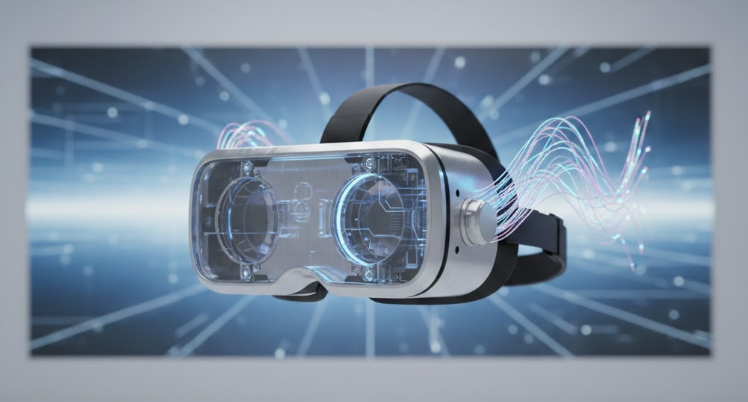
AR vs. VR in the Metaverse: Which Technology Wins?
The Metaverse promises a new digital frontier where virtual worlds merge with physical reality. But at the heart of this evolution are two competing — yet complementary — technologies: Augmented Reality (AR) and Virtual Reality (VR).
Both are revolutionizing how we connect, play, work, and explore, yet they do so in very different ways. The question is: when it comes to building the Metaverse, which technology will win — AR or VR?
Let’s dive deep into their differences, use cases, challenges, and future potential.
Understanding the Metaverse
Before comparing AR and VR, it’s crucial to understand the Metaverse itself.
The Metaverse is a collective, interconnected digital space where people can interact through avatars in real time. It blends virtual environments, digital economies, and real-world experiences.
Key features include:
- Persistent virtual worlds that exist beyond user sessions.
- Interoperable assets and identities across platforms.
- Real-time collaboration, gaming, and commerce.
The Metaverse aims to make digital interaction as natural and immersive as real life — and both AR and VR are vital to achieving that vision.
What Is Virtual Reality (VR)?
Virtual Reality (VR) immerses users in a fully digital world. Using headsets like the Meta Quest 3, HTC Vive, or PlayStation VR, users enter computer-generated environments where every visual, sound, and interaction is simulated.
Key characteristics:
- Fully immersive experience.
- Requires VR hardware (headset, sensors, controllers).
- Often used for gaming, simulation, and training.
VR replaces the user’s surroundings entirely, transporting them into an alternate universe — from virtual classrooms to corporate meetings in 3D environments.
What Is Augmented Reality (AR)?
Augmented Reality (AR) enhances the real world by overlaying digital content — like images, animations, or data — onto your surroundings.
Examples:
- Pokémon GO blending gameplay with real-world locations.
- Snapchat and Instagram filters using face-tracking AR.
- Apple Vision Pro and Microsoft HoloLens integrating digital apps into physical space.
Key characteristics:
- Merges digital and real environments.
- Accessible via smartphones, AR glasses, or headsets.
- Ideal for navigation, education, and retail.
While VR builds a new world, AR enhances the one we already live in.
The Core Difference: Immersion vs. Integration
The main distinction lies in how users experience the Metaverse.
- VR isolates users from reality, immersing them fully in a synthetic environment.
- AR integrates digital layers into the real world, keeping users connected to their physical surroundings.
In essence:
VR transports you. AR transforms your world.
1. Hardware and Accessibility
VR:
- Requires headsets, motion controllers, and sometimes high-end PCs.
- Costs are falling, but accessibility remains limited to enthusiasts and professionals.
AR:
- Runs on everyday devices like smartphones and tablets.
- AR glasses (like Apple Vision Pro) are expanding usability.
Winner: AR — because it’s easier for the public to access and integrate into daily life.
2. Immersion and Experience Quality
VR:
- Delivers unmatched immersion — ideal for gaming, simulations, and training.
- Enables total escapism and creativity in virtual worlds.
AR:
- Provides contextual information in real time but lacks deep sensory immersion.
- Interaction depends heavily on device quality and environmental conditions.
Winner: VR — for offering the most immersive Metaverse experience.
3. Real-World Applications
AR Applications:
- Retail: Virtual try-ons and 3D product previews.
- Healthcare: Surgical guidance and anatomy visualization.
- Education: Interactive learning layered over real-world objects.
- Real Estate: Virtual property tours through mobile AR.
VR Applications:
- Gaming: Fully interactive 3D worlds.
- Training: Simulating dangerous or complex tasks.
- Collaboration: Virtual workspaces for remote teams.
- Therapy: Exposure treatment and cognitive rehabilitation.
Winner: Tie — both serve different sectors effectively, often complementing each other.
4. Social Interaction and Connectivity
VR:
- Platforms like Horizon Worlds and VRChat enable deep social presence.
- Users can create avatars, attend concerts, or hold meetings in immersive 3D spaces.
AR:
- Focuses on enhancing social engagement in the real world (e.g., AR filters, navigation, live events).
- Bridges physical and digital connections.
Winner: Both — AR connects people in the real world, VR connects them beyond it.
5. Technical Challenges
VR Challenges:
- Motion sickness and physical discomfort.
- High hardware costs and power requirements.
- Limited portability.
AR Challenges:
- Battery consumption and limited field of view.
- Inconsistent tracking in variable lighting.
- Privacy concerns from continuous camera use.
Winner: AR — fewer physical drawbacks, but still evolving technically.
6. Privacy and Ethics in the Metaverse
Both AR and VR raise ethical concerns.
- AR Risks: Continuous data collection from cameras and sensors can expose users’ surroundings.
- VR Risks: Tracking biometric and behavioral data can lead to manipulation or surveillance.
Ethical safeguards must include:
- Transparent data policies.
- Opt-in consent systems.
- Secure encryption and anonymization.
Winner: Neither — both must overcome major privacy hurdles to gain user trust.
7. Economic Opportunities
VR Economy:
- Virtual real estate, 3D marketplaces, and immersive gaming economies.
- Businesses use VR for virtual conferences and digital twins.
AR Economy:
- Brands use AR for marketing, advertising, and e-commerce engagement.
- AR navigation, education, and retail tools drive real-world monetization.
Winner: AR — it’s already more monetizable at scale thanks to smartphone integration.
8. Future Outlook: Merging Realities
As technology evolves, the future Metaverse won’t choose between AR and VR — it will combine both into a seamless ecosystem known as Mixed Reality (MR).
Example:
- A user in AR glasses could interact with a VR participant inside a shared digital environment.
- Hybrid platforms will blend physical and virtual interactions into one unified experience.
The true winner isn’t AR or VR — it’s the convergence of both.
9. AR vs VR Market Trends
- AR Market Value (2025 forecast): $90+ billion, driven by enterprise and mobile apps.
- VR Market Value (2025 forecast): $70+ billion, dominated by gaming and training.
- Mixed Reality Growth: Accelerating due to enterprise adoption and headset innovation.
Both are growing rapidly, but AR’s scalability gives it a stronger near-term lead.
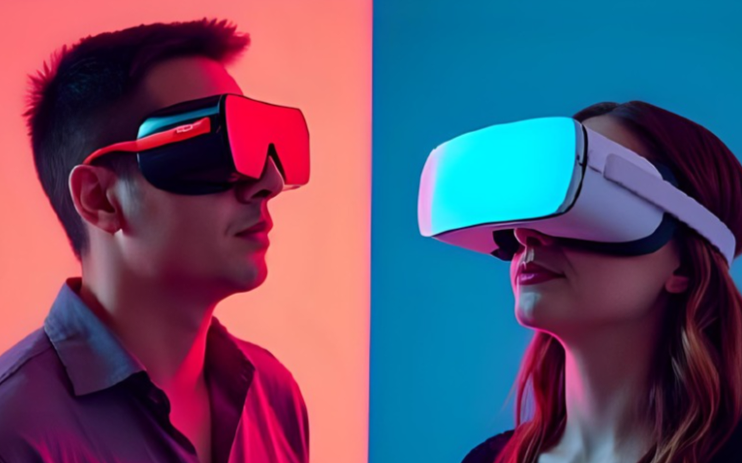
Alt text: comparison of AR and VR technologies shaping the future of the Metaverse
10. The Winner in the Metaverse Race
So, who wins — AR or VR?
- Short-term leader: AR — more accessible and integrated into daily life.
- Long-term potential: VR — offers deeper immersion and limitless creativity.
- Ultimate future: Both — together forming the backbone of the immersive Metaverse.
In the Metaverse, AR is the bridge, and VR is the destination.
Conclusion: A Shared Future of Immersion
The battle of AR vs VR in the Metaverse isn’t a fight for dominance — it’s a path toward collaboration. Each technology brings unique strengths: AR connects the physical and digital worlds, while VR creates entirely new realities.
The true Metaverse will merge both, letting users shift fluidly between augmented layers and virtual spaces.
The real victory lies not in one technology surpassing the other, but in their fusion shaping the next era of human experience.
FAQ
1. What’s the main difference between AR and VR?
AR overlays digital content onto the real world, while VR immerses users in a completely virtual environment.
2. Which technology is more accessible today?
AR — because it runs on smartphones and tablets, while VR requires specialized hardware.
3. Can AR and VR work together?
Yes. Mixed Reality (MR) combines both technologies, allowing users to interact with virtual and physical elements simultaneously.
4. Which has more business potential?
AR currently offers greater real-world applications, but VR has growing opportunities in entertainment and enterprise.
5. Who will win in the Metaverse — AR or VR?
Neither alone. The Metaverse’s future depends on the integration of both technologies, working together to create a unified digital universe.