How 5G and Cloud Computing Are Fueling the Metaverse

The Metaverse is rapidly emerging as the next digital frontier — a fully immersive, interactive virtual universe that connects people, businesses, and digital assets. Yet behind this futuristic world lies a powerful foundation: 5G and cloud computing.
These two technologies are the invisible engines driving the Metaverse. 5G delivers lightning-fast, low-latency connectivity, while cloud computing provides the massive processing power needed to render vast, dynamic virtual environments.
Together, they’re not just enabling the Metaverse — they’re transforming how we experience the digital world.
Understanding the Metaverse Infrastructure
The Metaverse isn’t just a single app or platform; it’s an interconnected network of digital spaces. Users can attend concerts, work in virtual offices, and explore 3D worlds — all in real time.
To make that possible, the Metaverse relies on:
- High-speed data transfer for real-time responsiveness.
- Massive computational power to create and render virtual environments.
- Scalable networks capable of supporting millions of users simultaneously.
That’s where 5G and cloud computing come in — as the backbone of this new digital reality.
1. What Makes 5G a Game-Changer
5G is the fifth generation of wireless connectivity, offering speeds up to 100 times faster than 4G and latency as low as one millisecond.
In the Metaverse, that translates into:
- Instant interactions with no lag.
- Smooth streaming of high-resolution VR and AR content.
- Real-time collaboration in 3D environments.
From virtual meetings to multiplayer experiences, 5G ensures that every connection feels seamless and natural.
2. The Role of Cloud Computing
While 5G handles speed and connection, cloud computing manages processing and storage.
Instead of running heavy programs locally, users can access virtual worlds and applications through cloud servers. This approach enables:
- Scalable performance across millions of users.
- Device independence, allowing even low-power devices to access complex worlds.
- Continuous updates and synchronization between platforms.
In short, cloud computing gives the Metaverse its strength and flexibility.
3. How 5G and Cloud Work Together
The synergy between 5G and cloud computing is what makes the Metaverse truly functional.
- 5G provides fast data transfer between devices and servers.
- The cloud performs high-level computations and sends results back instantly.
- Users experience immersive environments without delays or crashes.
This combination reduces the need for expensive local hardware, opening the door for more people to explore virtual worlds.
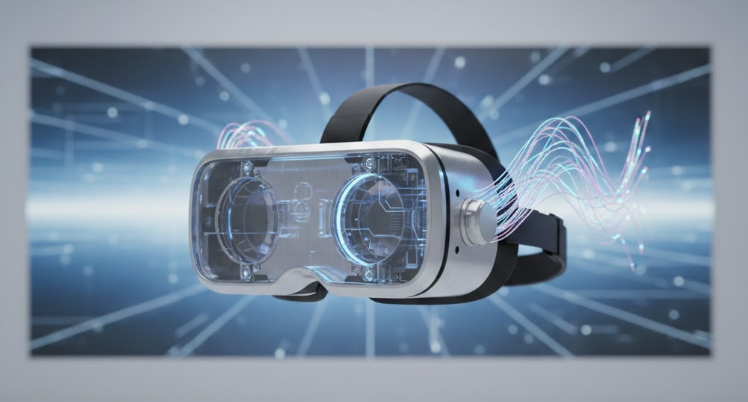
Alt text: Illustration showing 5G and cloud computing working together to power the Metaverse.
4. Real-Time Rendering and Edge Computing
Rendering a 3D world requires immense power. With edge computing, data is processed closer to users, minimizing latency and improving performance.
This approach allows:
- Faster visual rendering in virtual reality.
- Responsive controls for interactive experiences.
- Localized data processing to prevent network overloads.
When paired with 5G networks, edge computing makes the Metaverse smoother and more lifelike than ever.
5. Impact on Gaming and Entertainment
The gaming industry is leading the Metaverse revolution. Thanks to 5G and cloud computing, users can now:
- Stream VR and AR games with zero lag.
- Join massive online worlds with thousands of players.
- Experience photorealistic graphics without needing expensive consoles.
Platforms like NVIDIA GeForce Now and Xbox Cloud Gaming already demonstrate how real-time cloud streaming and 5G connectivity redefine entertainment.
6. Transforming Business Collaboration
In the corporate world, 5G and cloud computing enable virtual meetings and global teamwork within immersive 3D offices.
- Teams can share designs and data in real time.
- AI-driven assistants can operate within virtual workspaces.
- Cloud-hosted collaboration ensures data is always synchronized and secure.
This creates a future where remote work becomes more interactive and engaging — as if everyone is truly in the same room.
7. Expanding Education and Training
In education, these technologies are unlocking immersive learning environments.
With 5G connectivity, students can participate in real-time simulations, explore virtual labs, and collaborate globally. Meanwhile, cloud platforms host massive educational resources and analytics to personalize learning.
The result? Faster access, deeper understanding, and more interactive teaching experiences.
8. Revolutionizing Healthcare
5G and cloud computing are also transforming healthcare delivery in the Metaverse:
- Surgeons can practice procedures in virtual reality.
- Medical students can interact with 3D anatomy models.
- Doctors can use remote diagnostics powered by real-time cloud analytics.
Together, these advancements improve both access and precision in patient care.
9. Challenges of Integration
Despite their promise, these technologies face hurdles:
- Infrastructure cost: Global 5G deployment remains uneven.
- Energy use: Cloud data centers consume vast amounts of power.
- Privacy risks: Massive data exchange raises security concerns.
Balancing innovation with sustainability and ethics will be key to maintaining trust in the Metaverse ecosystem.
10. The Future of Connectivity and Computing
The future lies in deeper integration between 5G and cloud computing. As technology advances, we can expect:
- Hyper-realistic Metaverse worlds accessible from any device.
- Smarter AI-driven interactions powered by cloud processing.
- Universal connectivity linking billions of users globally.
These technologies will make the Metaverse scalable, interactive, and available to everyone — anywhere, anytime.
Alt text: Network map showing global 5G and cloud computing infrastructure supporting the Metaverse.
Conclusion: The Backbone of the Metaverse
The Metaverse isn’t powered by imagination alone — it runs on the infrastructure built by 5G and cloud computing.
5G provides the speed and responsiveness that make virtual interactions feel real, while the cloud supplies the processing power that keeps the Metaverse alive and evolving.
Together, they form the backbone of the new digital world, where humans, AI, and data coexist in immersive harmony.
The revolution has begun — and it’s powered by 5G and the cloud.
FAQ
1. How does 5G support the Metaverse?
It delivers ultra-fast, low-latency connections for smooth, real-time virtual interactions.
2. What role does cloud computing play?
It provides scalable processing and storage to host immersive digital environments.
3. Can 5G and cloud computing work together?
Yes, they complement each other — 5G handles speed, and the cloud handles computation.
4. What industries benefit most from these technologies?
Gaming, healthcare, education, and business collaboration see the biggest impact.
5. Why are 5G and cloud computing essential for the Metaverse?
They make the Metaverse fast, scalable, and accessible, enabling seamless virtual experiences worldwide.