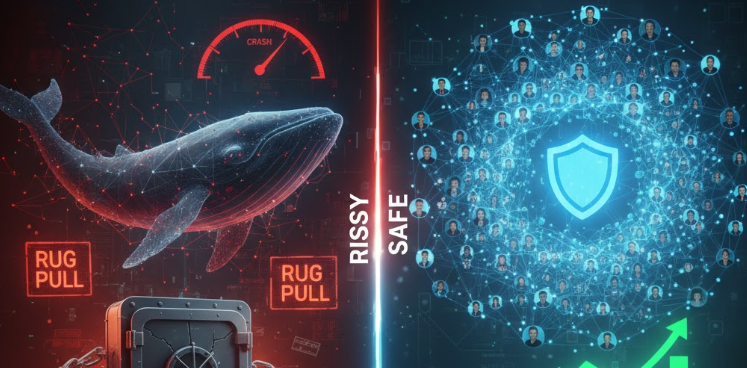
DeFi User Protection: How Platforms Keep Users Safe

DeFi user protection has become one of the most important conversations in decentralized finance. Early adopters accepted risk as the price of innovation. Today, however, DeFi platforms support millions of users and billions in assets. With that scale comes responsibility.
Unlike traditional finance, DeFi removes intermediaries. There is no bank branch to call. No fraud department to reverse a mistake. That freedom attracts users, yet it also raises the stakes. When something goes wrong, losses can be immediate and permanent.
Because of this reality, DeFi platforms have evolved rapidly. Protection no longer relies on trust alone. Instead, it emerges from design choices, transparency, incentives, and technology working together. Understanding how platforms protect users reveals how decentralized systems mature responsibly.
Why DeFi User Protection Matters in a Trustless System
DeFi operates on trustless principles. Code replaces institutions. Rules execute automatically.
However, trustless does not mean risk-free. It means users must rely on systems rather than people. Therefore, protection must be embedded directly into protocols.
DeFi user protection matters because participation depends on confidence. Without safeguards, adoption stalls. When users feel exposed, capital retreats.
Protection does not eliminate risk. It manages it openly and predictably.
Smart Contract Audits as a Foundation of Protection
Audits remain the first layer of defense. Independent security firms review smart contract code for vulnerabilities.
These audits identify logic errors, exploit paths, and design flaws before deployment. Although audits do not guarantee safety, they significantly reduce known risks.
Most mature platforms conduct multiple audits. Some repeat audits after updates. Others publish reports publicly.
By prioritizing audits, DeFi user protection starts before users interact with the protocol.
Open-Source Transparency Builds Collective Security
Transparency strengthens protection. Open-source code allows anyone to review, test, and critique systems.
This visibility creates collective oversight. Developers, researchers, and users identify issues faster.
Closed systems hide flaws. Open systems expose them early.
DeFi user protection improves when transparency invites continuous review rather than blind trust.
Bug Bounty Programs Encourage Ethical Disclosure
Audits catch many issues. Bug bounties extend coverage.
Bug bounty programs reward researchers who responsibly disclose vulnerabilities. Incentives align with security goals.
By paying for discoveries, platforms reduce the chance that flaws are exploited maliciously.
Bug bounties represent proactive DeFi user protection through community participation.
Decentralized Governance as a Protective Mechanism
Governance distributes decision power. Token holders influence upgrades, parameters, and responses.
Decentralization reduces single points of failure. No individual controls outcomes alone.
While governance introduces complexity, it also prevents unilateral abuse.
DeFi user protection benefits when governance aligns incentives and distributes authority responsibly.
Emergency Controls and Pause Mechanisms
Some risks require fast response. Exploits move quickly.
Emergency pause functions allow platforms to halt activity temporarily. This limits damage during attacks.
However, emergency powers introduce centralization concerns. Transparency becomes critical.
DeFi user protection balances responsiveness with accountability through disclosed emergency mechanisms.
Economic Safeguards and Risk Parameters
Many platforms implement economic protections. Collateral ratios, liquidation thresholds, and circuit breakers reduce systemic risk.
These parameters prevent cascading failures. They limit exposure during volatility.
Although they may reduce efficiency, safeguards protect users during stress.
Economic design plays a quiet but vital role in DeFi user protection.
Liquidity Controls and Market Stability
Liquidity affects safety. Thin liquidity increases manipulation risk.
Platforms design incentives to attract stable liquidity. Some cap position sizes. Others smooth pricing curves.
By managing liquidity carefully, platforms reduce attack surfaces.
Market stability contributes directly to user protection.
Oracle Security and Data Integrity
Oracles feed external data into protocols. If data is wrong, outcomes break.
Secure oracles aggregate sources, apply validation, and resist manipulation.
Platforms diversify oracle providers to reduce reliance.
Oracle integrity remains essential for DeFi user protection, especially in lending and derivatives.
Permission Management and Wallet Safety
Users interact through wallets. Permissions grant access.
Many platforms display clear permission prompts. Some offer dashboards to revoke approvals.
Reducing unnecessary permissions limits damage if wallets are compromised.
User-facing tools enhance DeFi user protection by improving awareness.
User Education as a Defensive Layer
Education prevents mistakes. Many losses result from misunderstanding rather than exploitation.
Platforms publish guides, warnings, and tutorials. They explain risks openly.
Clear communication reduces accidental losses and phishing susceptibility.
Education strengthens DeFi user protection by empowering informed participation.
Front-End Safeguards and Interface Design
User interfaces influence behavior. Poor design leads to errors.
Platforms highlight risky actions. They warn about irreversible transactions.
Clear interfaces reduce misclicks and misunderstandings.
Design choices quietly support DeFi user protection.
Monitoring and Real-Time Risk Detection
Active monitoring detects unusual activity early.
Platforms track transaction patterns, liquidity shifts, and abnormal behavior.
Alerts trigger responses before damage spreads.
Monitoring systems act as early-warning defenses.
Insurance and Risk Sharing Mechanisms
Some platforms integrate insurance pools. Users can opt into coverage.
Insurance spreads risk across participants. It does not prevent loss but mitigates impact.
Decentralized insurance reflects shared responsibility.
Insurance contributes to DeFi user protection by softening worst-case outcomes.
Segmentation of Protocol Components
Complex systems introduce risk. Segmentation limits blast radius.
Platforms isolate modules. Failures affect parts rather than wholes.
This architectural choice prevents cascading collapse.
Segmentation enhances DeFi user protection through containment.
Gradual Rollouts and Testing Environments
New features introduce uncertainty. Gradual rollouts reduce exposure.
Testnets allow experimentation without real assets. Staged deployments limit risk.
Platforms that test thoroughly protect users from experimental failures.
Caution supports long-term safety.
Community Reporting and Feedback Loops
Communities notice issues quickly. Feedback surfaces problems early.
Platforms encourage reporting. They respond transparently.
Active dialogue improves trust and responsiveness.
Community engagement strengthens DeFi user protection organically.
Rate Limits and Anti-Abuse Controls
Automation can amplify attacks. Rate limits slow malicious activity.
Anti-abuse controls detect spam, bots, and manipulation.
These measures reduce exploit efficiency.
Operational controls add resilience.
Cross-Platform Collaboration on Security
Threats evolve across ecosystems. Information sharing helps.
Security researchers collaborate across platforms. Patterns emerge.
Collective learning improves protection for all users.
Collaboration amplifies DeFi user protection beyond individual protocols.
Compliance Considerations Without Centralization
Some platforms adopt compliance features selectively. They restrict sanctioned addresses or flagged activity.
These measures aim to protect users without undermining decentralization entirely.
Finding balance remains challenging.
Selective compliance reflects pragmatic protection strategies.
Reducing Single Points of Failure
Decentralization aims to eliminate chokepoints.
Multi-signature wallets distribute control. Redundant systems ensure continuity.
Reducing reliance on single actors improves resilience.
Structural decentralization supports DeFi user protection fundamentally.
Psychological Safety and User Confidence
Protection is not only technical. Confidence matters.
Clear communication reduces fear. Predictable behavior builds trust.
Platforms that explain risks honestly foster long-term loyalty.
Confidence encourages responsible usage.
Learning From Past Failures
Every exploit teaches lessons. Platforms adapt.
Post-mortems reveal weaknesses. Fixes follow.
Continuous improvement defines mature protection.
Experience strengthens systems over time.
Balancing Innovation With Safety
Innovation introduces risk. Excess caution slows progress.
Platforms must balance experimentation with protection.
Gradual iteration manages this tension.
Balanced evolution sustains growth.
Why DeFi User Protection Is Still Evolving
DeFi remains young. Threats evolve. Tools improve.
Protection mechanisms adapt continuously.
What works today may change tomorrow.
Flexibility defines effective DeFi user protection.
What Users Can Do Alongside Platforms
Protection is shared. Users play roles.
Using hardware wallets, verifying links, and staying informed reduce risk.
Platforms provide tools. Users apply discipline.
Shared responsibility strengthens outcomes.
Future Trends in DeFi Protection
Automation will improve detection. Formal verification will expand.
AI-assisted monitoring will enhance defense.
Protection will become proactive rather than reactive.
Progress continues.
Conclusion
DeFi user protection has transformed from an afterthought into a core design principle. Through audits, transparency, governance, economic safeguards, education, and community collaboration, platforms work to protect users while preserving decentralization. Protection in DeFi is not absolute. It is layered, adaptive, and shared. As the ecosystem matures, the platforms that prioritize user safety without sacrificing openness will define the future of decentralized finance.
FAQ
1. What is DeFi user protection?
It refers to the systems and practices DeFi platforms use to reduce risk and safeguard users.
2. Are DeFi platforms completely safe?
No. Risks remain, but protection mechanisms significantly reduce known threats.
3. Do audits guarantee security?
No. Audits lower risk but cannot prevent every exploit.
4. Can users protect themselves in DeFi?
Yes. Education, careful permission management, and secure wallets help greatly.
5. Will DeFi user protection improve over time?
Yes. As technology and experience grow, protection mechanisms continue to evolve.