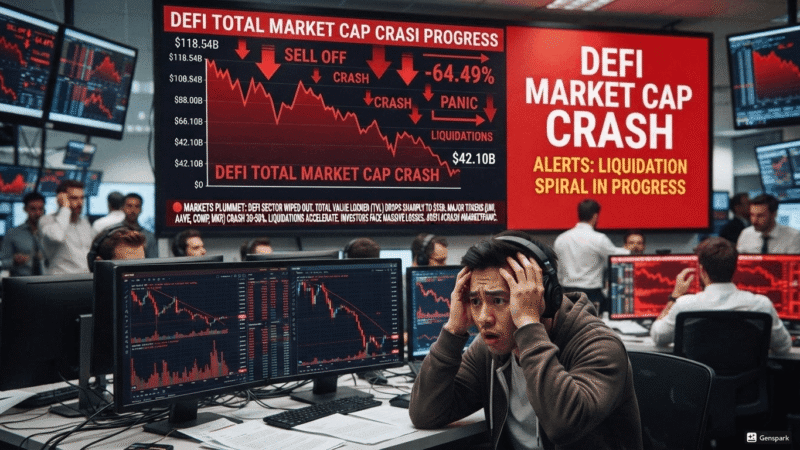
Unfair Token Allocation Risks Every DeFi Investor Must Know
Unfair token allocation risks are among the most damaging threats in the world of decentralized finance. DeFi promises openness, transparency, and community-driven growth. Yet some projects quietly manipulate distribution, reward insiders unfairly, or create hidden advantages that harm regular investors. Because token allocation determines who holds power, who gets profits, and who controls governance, any unfair imbalance can destabilize an entire ecosystem.
When a project launches with poor distribution, everything built on top of it becomes unstable. Prices become vulnerable to manipulation. Governance becomes dominated by a handful of insiders. Early supporters feel betrayed. Even if the technology is strong, unfair token allocations can lead to panic, sell-offs, and long-term reputational damage. Understanding how these risks appear—and knowing how to spot them—empowers you to make smarter investment decisions.
In this article, we’ll explore the mechanics behind unfair token allocation risks, why they occur, the warning signs to watch for, and the strategies investors can use to stay protected. You’ll see how distribution shapes power dynamics in DeFi and why transparency matters more than ever.
Why Unfair Token Allocation Risks Matter in DeFi
Unfair token allocation risks undermine everything decentralized finance stands for. DeFi is built on a simple promise: power should not be centralized in the hands of a few. Instead, the system should be transparent and fair. However, some projects quietly reserve massive portions of tokens for insiders, developers, or private investors. Although this may benefit them in the short term, it puts long-term investors at a disadvantage.
When insiders hold disproportionate amounts of tokens, several dangers appear. Prices can be manipulated easily. Governance decisions may not reflect the community’s interests. Market confidence can collapse quickly when insiders dump their holdings. Because DeFi ecosystems rely on community trust, unfair allocations create instability and vulnerability.
Furthermore, unfair distribution contradicts decentralization. A project might claim to be community-driven while the majority of power remains concentrated in a handful of wallets. When decision-making becomes centralized, the value of decentralization disappears. This is why understanding allocation risks is just as important as analyzing tokenomics or smart contract security.
How Token Allocation Shapes Power and Control
Token allocation influences every part of a DeFi project. It determines who holds influence, who receives rewards, and who has authority in governance. In many protocols, voting power is directly tied to token ownership. Therefore, those who receive the largest allocations often control key decisions.
This creates two possible outcomes. First, when distribution is fair, power spreads across the community. Decisions become balanced. Network growth becomes sustainable. Second, when distribution is unfair, control becomes concentrated. Decisions may serve insider interests rather than the community.
Because DeFi projects rely heavily on community governance, unfair token allocation risks threaten the foundation of decentralized systems. Without checks and balances, insiders can approve changes that benefit themselves financially, even if the community disagrees. This behavior contradicts the spirit of decentralization.
Investors who understand the connection between allocation and control are better prepared to identify manipulative practices before they cause harm.
Common Forms of Unfair Token Allocation in DeFi
Unfair token allocations appear in many forms. Some are obvious. Others are hidden behind complex tokenomics. Regardless of their style, all create imbalance and introduce risks that investors must avoid.
Here are the most common patterns:
1. Excessive Insider Allocations
When founders, advisors, or private investors receive massive token shares, power becomes unbalanced. These insiders may control voting outcomes or influence prices.
2. Undisclosed Project Wallets
Some DeFi teams create additional wallets that hold large token amounts. These wallets remain hidden from the public until they are used to manipulate markets.
3. Weak or Nonexistent Vesting Schedules
When insiders receive tokens with no vesting or lock-up periods, they can dump their tokens immediately after launch. This behavior causes sharp price crashes and damages investor confidence.
4. Fake Public Allocations
Some projects claim to reserve a percentage for the community but secretly reallocate it to insiders or tightly connected entities.
5. Manipulated Airdrops
Airdrops should reward active participants. However, some projects direct airdrop tokens to insiders by using fake addresses or undisclosed selection criteria.
6. Flash Distribution Events
Projects sometimes release tokens during extremely short windows, giving insiders early access while excluding regular users.
Each one of these practices creates unfair token allocation risks that undermine transparency and weaken trust.
How Hidden Token Distributions Create Severe Risks
Hidden token allocations occur when teams or insiders store large token supplies in undisclosed wallets. These wallets can be used strategically to control prices, sway governance, or extract liquidity. Investors may believe the supply is well-distributed, but hidden holdings distort what appears to be a decentralized ecosystem.
Hidden allocation risks include:
- Sudden sell-offs that crash market prices
- Manipulated liquidity pools
- Unexpected governance control
- Fake scarcity signals
- Misleading tokenomics
Because blockchain transactions are public, some investors assume every wallet is accounted for. Yet skilled insiders disguise allocation patterns by using multiple addresses, timing transfers strategically, or funneling tokens through intermediaries. This behavior is difficult to detect without careful analysis.
Hidden token allocations create an illusion of fair distribution while undermining trust. When discovered, they can destroy a project’s credibility.
Why Weak Vesting Periods Make DeFi Projects Unsafe
Strong vesting periods are essential for maintaining a project’s integrity. Vesting requires insiders to hold their tokens for a fixed period, preventing immediate sell-offs. Without vesting, insiders can dump large amounts of tokens on the open market shortly after launch. This sudden supply spike causes price crashes and damages investor portfolios.
Unfair token allocation risks increase significantly when vesting periods are:
- Too short
- Not enforced
- Poorly designed
- Nonexistent
Some projects showcase vesting schedules to appear transparent. However, they may quietly distribute unlocked tokens to insider wallets. Investors must examine vesting contracts directly, rather than relying on website promises.
A strong vesting schedule protects the community. It signals long-term commitment from the team and prevents early manipulation.
How Early Investor Advantages Create Unfair Conditions
Many DeFi projects raise funds from private investors before launching public sales. These early investors often receive tokens at steep discounts. Although this practice is common, it becomes problematic when the discounts are extreme or when private investors receive disproportionate amounts of supply.
Early investor advantages can cause:
- Oversized influence in governance
- Immediate profit-taking after public sales
- Extreme price volatility
- Market manipulation through coordinated selling
When private investors hold too much control, the project becomes dependent on their behavior rather than community growth. This introduces pressure on token prices and diminishes decentralization.
To determine whether early investor allocations are fair, examine:
- How much supply they receive
- At what price they bought in
- How long their tokens are locked
- Whether their voting power is capped
Investors who overlook these details expose themselves to long-term allocation risks.
Why Poor Transparency Makes Allocation Risks Worse
Transparency is the most powerful defense against unfair token allocation risks. When a project clearly documents token distribution, vesting schedules, founder allocations, and treasury management practices, the community stays informed and protected.
However, some DeFi projects provide vague allocation details. Others offer no details at all. This lack of transparency leads to:
- Misleading supply expectations
- Difficulty assessing governance control
- Hidden insider holdings
- Inability to calculate real circulating supply
- Weakened trust among investors
A project that refuses to disclose critical allocation details likely has something to hide. Responsible teams understand that investors deserve clarity, not confusion.
When transparency is absent, allocation risks increase, making the project unsafe for long-term participation.
How Tokenomics Models Can Hide Allocation Manipulation
Tokenomics models are designed to explain supply, distribution, utility, and inflation. However, some tokenomics diagrams intentionally obscure unfair allocation patterns. They use complex terms, blurred percentages, or misleading graphics to misrepresent distribution.
Hidden manipulation tactics include:
- Combining insider allocations under vague categories
- Exaggerating community distribution
- Using ambiguous labels like “ecosystem growth”
- Failing to clarify unlock schedules
- Not disclosing contract addresses
Investors must analyze tokenomics critically. Simple, clear models are usually a good sign. Complex, confusing models often signal hidden risks.
Tokenomics should empower investors—not mislead them.
Why Unfair Token Allocation Leads to Market Manipulation
Unfair token allocation risks often lead directly to market manipulation. When a few wallets control large portions of supply, they can move markets at will. This behavior harms long-term investors who enter the project expecting stability.
Market manipulation tactics include:
- Pump-and-dump schemes
- Liquidity withdrawal at key moments
- Price suppression to accumulate more tokens
- Sudden massive sell-offs
- Artificial buy walls or sell walls
These behaviors are much easier when token allocation is heavily concentrated. Because DeFi markets lack regulation, manipulation goes unpunished.
This is why investors must treat allocation concentration as a serious red flag. Distribution patterns shape everything from price stability to governance fairness.
How Governance Becomes Unsafe Under Unfair Allocation
Governance is one of the core principles of DeFi. Token holders shape the protocol’s future through voting. However, when tokens are unfairly distributed, governance becomes compromised.
A few risks emerge:
- Insiders dominate decision-making
- Community votes become symbolic
- Malicious proposals can pass easily
- Protocol rules can be changed unexpectedly
- Treasury funds can be drained
If a small group controls governance, the project becomes centralized in practice—even if it appears decentralized. The community loses influence, and decisions no longer reflect collective interests.
Healthy governance requires balanced distribution. Without it, decentralization becomes an illusion.
Warning Signs of Unfair Token Allocation Risks
Smart investors look for red flags. These warning signs often appear early, long before a project experiences issues.
Watch for:
- No published token distribution
- Missing or vague vesting schedules
- Extremely large team allocations
- Sudden token transfers to unknown wallets
- Private investors receiving excessive supply
- Unclear circulating supply numbers
- Whitepaper inconsistencies
- Tokenomics charts that hide details
- Lack of third-party audits
- Suspiciously timed token unlocks
When multiple red flags appear together, allocation risks increase dramatically.
How to Protect Yourself From Unfair Allocation Risks
Although unfair allocation risks are common, investors can protect themselves through smart research and strategy.
Follow these steps:
- Examine the whitepaper for clear allocation details
- Review vesting schedules and verify them on-chain
- Analyze wallet concentration through blockchain explorers
- Look for independent tokenomics audits
- Compare allocations to industry standards
- Monitor community discussions for transparency issues
- Avoid projects with vague or shifting tokenomics
- Diversify instead of relying on one protocol
Additionally, learning how to interpret on-chain data can help you spot suspicious patterns early. Blockchain transparency is your greatest ally.
Why Fair Token Allocation Builds Stronger DeFi Projects
Fair distribution supports long-term stability. When power spreads across users, founders, investors, and partners, everyone benefits from shared growth. Healthy allocation leads to:
- Balanced governance
- Strong community engagement
- Long-term project sustainability
- Reduced manipulation risk
- Higher investor confidence
Responsible DeFi teams understand that fair token allocation is essential. They design distribution models that reward early supporters, incentivize participation, and protect long-term credibility.
Projects with fair allocations tend to survive longer and build stronger communities.
Conclusion
Unfair token allocation risks threaten the integrity of DeFi ecosystems and put investors at a serious disadvantage. When tokens are concentrated in the hands of insiders, governance becomes imbalanced, markets become unstable, and community trust disappears. To protect yourself in the rapidly evolving DeFi landscape, you must evaluate token distribution as carefully as you evaluate technology. Fair allocation is the backbone of decentralization. By understanding the warning signs and conducting thorough research, you can avoid dangerous projects and support protocols that prioritize transparency, fairness, and long-term value.
FAQ
1. What are unfair token allocation risks?
They are risks created by imbalanced token distribution that benefits insiders over the community.
2. Why is vesting important in token allocation?
Vesting prevents insiders from selling large amounts immediately and destabilizing prices.
3. How can investors identify unfair allocation?
By examining distribution charts, checking on-chain data, and reviewing vesting schedules.
4. What happens when insiders control too many tokens?
They can manipulate prices, dominate governance, and make decisions that harm users.
5. How do fair allocations help DeFi projects grow?
They create trust, stability, and balanced governance that supports long-term success.